As AI-driven and inference-based features began to scale across the DigitalOcean platform, the user experience became increasingly fragmented as different teams were introducing patterns, interactions, and visual styles independently, leading to inconsistency and confusion.
I led the definition of a design framework to bring structure to this emerging system. This work focused on establishing consistent human-AI interaction patterns, component behaviors, and integration principles to ensure that AI-driven experiences felt cohesive, trustworthy, and scalable across the platform.
Rather than simply standardizing UI, I focused on how AI should behave within the product. This included defining how it communicates, maintains context across workflows, and integrates into existing user journeys. This framework created a standardized foundation for scaling AI features in a way that remained intuitive and consistent for users, while operationally scalable to implement for designers, engineers, and product managers.
As multiple teams began building AI and inference powered features, the experience became fragmented across the platform. Without a shared application and styling framework, these inconsistencies risked confusing users, eroding trust, and creating implmentation inconsistencies. In order to help mitigate these issues, my work focused on defining a framework across three key areas to move beyond surface-level consistency and create a cohesive, scalable experience across the platform:
- Presentation - how this content is visually presented
- Interaction - how users engage with AI (inputs, outputs, feedback loops)
- Behavior - how AI responds, maintains context, and integrates across workflows
One of the challenges of this work was consolidating existing design patterns and styles for inference-based experiences across the platform. As multiple teams independently introduced AI-driven features, the experience became fragmented, both visually and behaviorally. Similar interactions behaved differently across surfaces, AI-generated content lacked clear annotations, and there was no shared model for how these systems should integrate into existing workflows. This needed to be addressed before we continued to scale these experiences, as it could lead to user confusion if they felt inconsistent and disjointed from the rest of the experience.
To begin, I conducted an audit of all existing inference-based features across the platform, documenting the design patterns, styles, and interactions. During this time, I documented my findings and presented them to the rest of the design team to ensure I wasn't missing any existing patterns or styles that were being used. I wanted this to be a collaborative effort to ensure that this framework would be adopted by others and scalable in the future.
.svg)
Besides other product designers, I also made sure to collaborate with several front end engineers to better understand what was in Storybook (our coded design system) and what has been coded using custom, one-off components already. This helped me better understand existing components and technical constraints for potential component development. After all this work, the audit revealed several insights:
- Inconsistent interaction patterns across different AI-driven features (AI products that users can build vs AI suggestions that come from the system)
- Existing design system components were not built to support dynamic, inference-based behavior
- No shared model for how AI systems should integrate into existing workflows
After conducting my initial research, I started writing the framework that specified styling, components, and interactions for any inference-based features. While much of this report codified the existing patterns and styles that were already in use, my primary contribution to these new standards was defining interaction design.
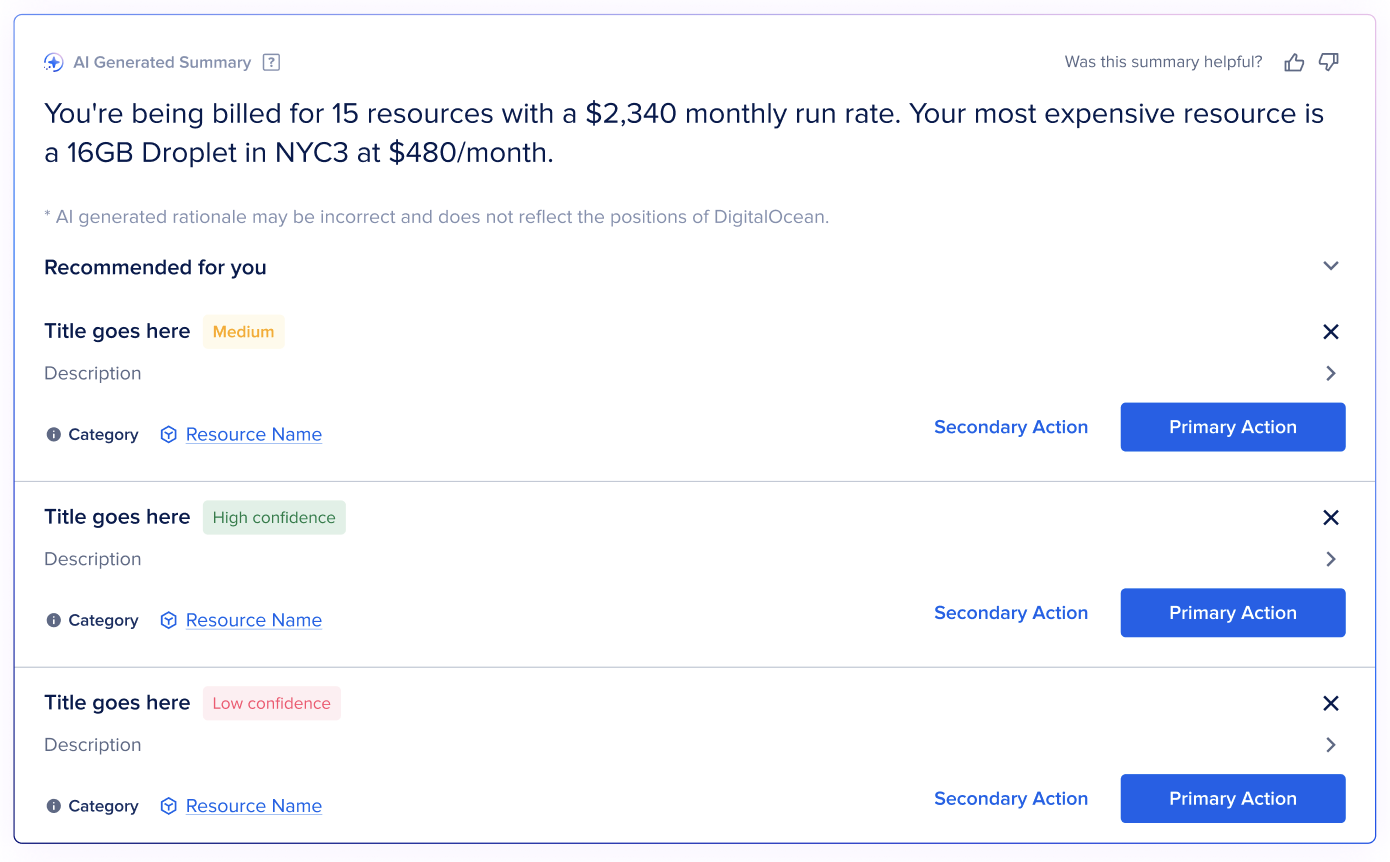
When defining the interactions users will have with these components and interactions between components, my primary goal was to create a cohesive and fluid experience across the platform to ensure it felt natural and consistent, not like several different agent experiences glued into one. Some of the core design principles and how that translated were as follows:
- Inference-based experiences should feel integrated, not additive -> interactions should extend existing workflows rather than interrupt them or feel like external tools.
- Context should persist across the platform -> A user should be able to open the AI assistant and continue a task across various areas of the platfrom without losing progress or context
- Transparency when displaying AI generated content -> Add a tag to identify AI created content
Once the initial framework was defined, I needed to validate these changes with several stakeholder groups - product designers, PMs, and engineers. I ensured each group was represented by tagged them in the report to review, with plans to also schedule a meeting to review the proposed changes, questions and concerns folks may have, and what this might mean moving forward for work related to inference. See the full report here.
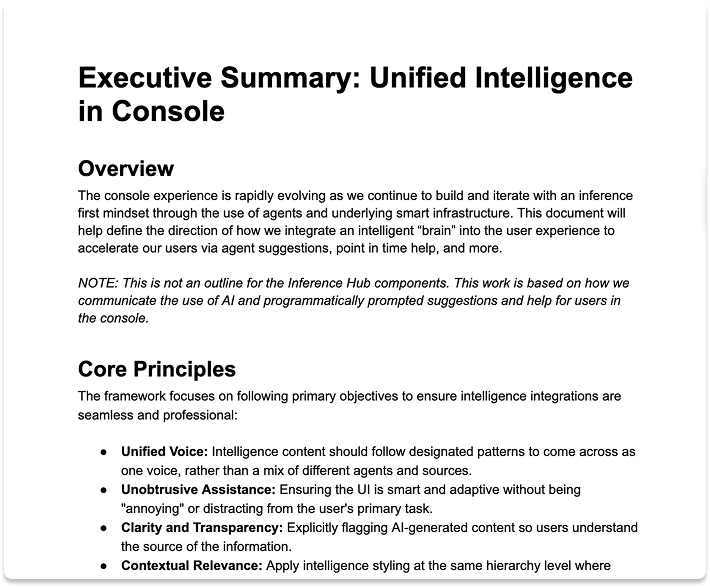
This work was just the first step towards integrating AI and inference-based experiences into the DigitalOcean platform. If I had more time, future work would include more user research, particularily around validating the desired interaction patterns and ensure we are avoiding any confusion surrounding these experiences, a larger scale rollout to the greater product organization on these new practices, and collaborating closely with the front end engineering team to implement styling and new components into Storybook.